
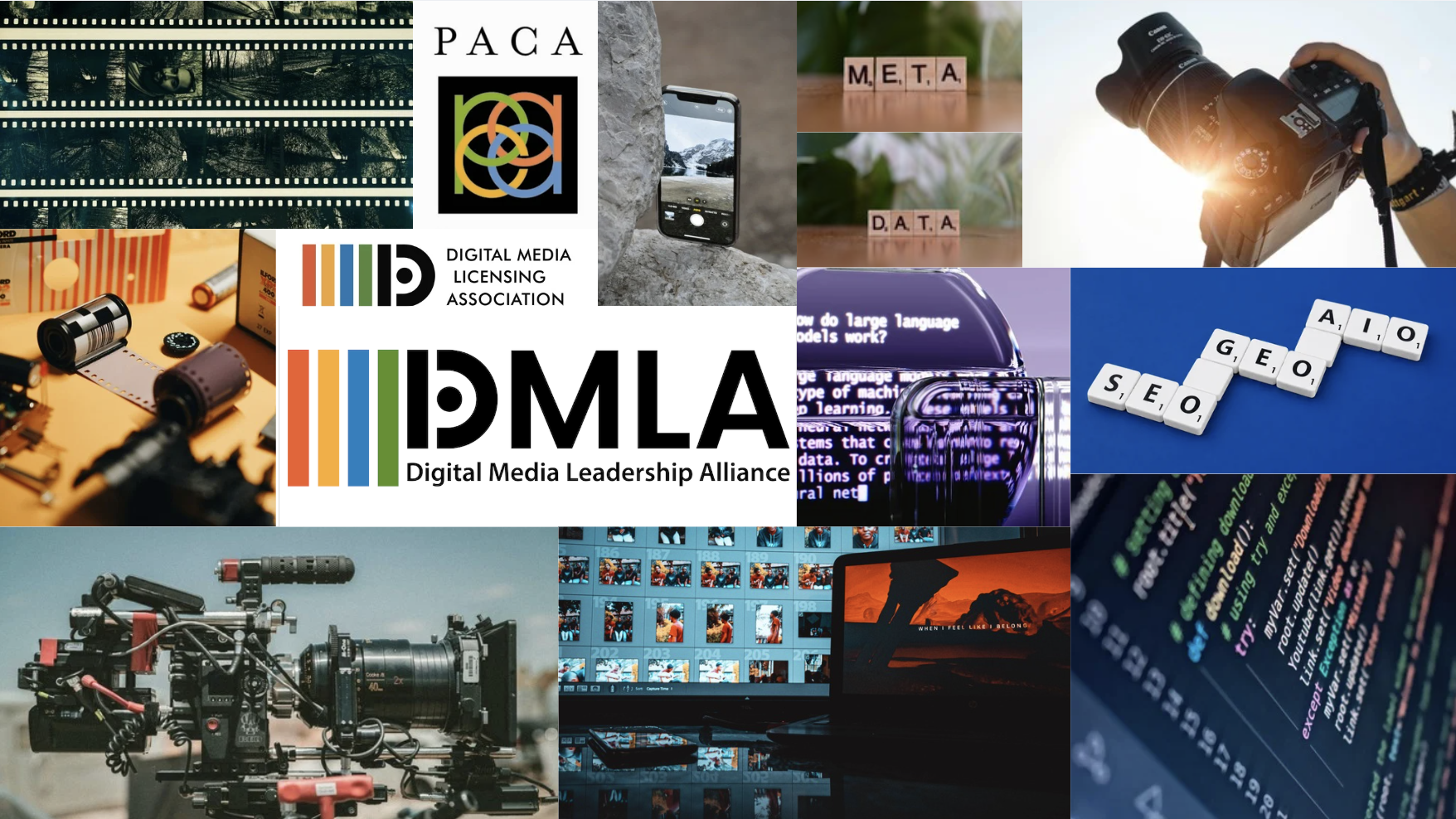
Founded as the Picture Archive Council of America (PACA), the organization began as a small group of stock photo agencies working together to address common business challenges and protect the value of licensed content. Over the decades, PACA—and later DMLA—grew alongside the industry itself, helping members navigate the transition from print to digital, from local markets to global distribution, and from traditional licensing models to today's AI-powered content ecosystem.
Throughout its history, the organization has served as a trusted forum for collaboration, education, advocacy, and innovation. DMLA has brought together creators, agencies, publishers, technology providers, legal experts, and industry leaders to address emerging challenges while advancing the value of creative work.
From defending licensing rights in the 1960s, to launching one of the industry's first international conferences in the 1990s, to leading conversations on copyright, content provenance, ethical AI, and digital discoverability today, DMLA has consistently helped the industry adapt to change while preserving the value of creative content.
Today, as the Digital Media Leadership Alliance, we continue that mission by shaping the future of digital media through advocacy, education, and connectivity—bringing together leaders across content, technology, rights, and licensing to address the opportunities and challenges of a rapidly evolving digital world.
History & Legacy
75 Years of Leadership in a
Changing Digital Media Landscape
From Picture Archives —> to Digital Creation —> to Artificial Intelligence
DMLA has helped shape the evolution of visual media, licensing, technology, and content discovery since 1951.
Picture Archive Council of America (1951)
-->
Digital Media Licensing Association (2016)
-->
Digital Media Leadership Alliance (2026)
-->
DMLA (2016-Present)
-->
Picture Archive Council of America (1951) --> Digital Media Licensing Association (2016) --> Digital Media Leadership Alliance (2026) --> DMLA (2016-Present) -->
75 Years At A Glance
1951
Founded as the Picture Agency Council of America - PACA -
New York City.
1977
Incorporated as a New York 501(c)6 corporation,
Picture Agency Council of America, Inc.
1995
First International Conference
2002
Rebranded Picture Archive Council of America
2004
Expanded Advocacy & Copyright Leadership
2014
Rebranded Digital Media Licensing Association (DMLA)
2023
First AI Summit (San Francisco)
2026
Rebranded Digital Media Leadership Alliance - (DMLA) - expanded membership

The Evolution of DMLA
The PACA Years: Building the Foundation
1951–1994
The story of DMLA begins in 1951 with the founding of the Picture Archive Council of America (PACA).
Created by a group of leading New York stock photography agencies, PACA was established at a time when the commercial image licensing industry was still in its infancy. The organization's founders recognized that many of the challenges facing agencies—copyright protection, licensing standards, business practices, and industry education—were too important to address alone. By working together, they could strengthen both their businesses and the broader industry.
Throughout the 1950s and 1960s, PACA helped establish a collaborative forum where industry leaders could share ideas, address common concerns, and advocate for the value of professionally licensed content. One of the organization's earliest collective efforts involved defending licensing rights when publishers sought to extend image usage beyond agreed terms, demonstrating the importance of industry cooperation and advocacy.
As the stock photography industry expanded beyond New York, PACA evolved from an informal association into a national organization. In 1977, the association formally incorporated as a nonprofit organization in New York State, creating a stronger foundation for future growth and leadership.
During the 1980s, PACA's role continued to expand. Annual meetings became an important source of professional education, networking, and best-practice sharing. Membership broadened as visual media evolved, welcoming organizations involved in emerging forms of content distribution, including footage and motion imagery.
By the early 1990s, PACA had established itself as the leading professional association serving the image licensing industry. The organization had established a reputation for bringing competitors together to solve common challenges, foster innovation, and advance professional standards. This foundation would position PACA for its next chapter—expanding its influence onto the international stage and helping shape the future of the visual media industry.
Building a Global Community
1995–2003
By the mid-1990s, the visual media industry was undergoing significant change. Advances in digital technology, growing international markets, and new distribution channels were transforming how content was created, managed, and licensed. PACA recognized that the challenges facing the industry were no longer confined to a single city or even a single country.
In 1995, the organization launched its first International Conference in New York City, bringing together approximately 800 professionals from across the visual media ecosystem. The event marked a turning point in PACA's history, establishing the association as a leading forum for education, networking, and collaboration among image licensing professionals worldwide.
As membership continued to grow, PACA hired its first Executive Director, creating a more formal organizational structure and expanding its ability to serve members. The association's conferences and educational programs became increasingly important resources for agencies, distributors, creators, and emerging technology providers navigating a rapidly changing marketplace.
The late 1990s also marked the beginning of the industry's transition from traditional film-based workflows to digital imaging and online licensing. PACA provided a forum where members could share best practices, discuss emerging technologies, and address common business challenges as the industry entered the digital age.
The organization's leadership was tested in the early 2000s. Following the events of September 11, 2001, PACA made the decision to proceed with its international conference in New York City, demonstrating its commitment to both the industry and the city. Shortly thereafter, the association overcame a significant financial crisis and emerged stronger, more focused, and better positioned to support its members.
By 2003, PACA had evolved from a national trade association into a respected international community. The foundation established during this period would pave the way for an expanded role in advocacy, copyright policy, and industry leadership in the years ahead.

Advocacy and Industry Leadership
2004–2015
As the digital transformation of the media industry accelerated, PACA expanded its mission beyond education and networking to become a stronger voice for advocacy, copyright protection, and industry leadership.
Beginning in 2004, the organization increased its focus on legislative and policy issues affecting creators, agencies, publishers, and rights holders. Recognizing that many of the challenges facing the industry extended beyond individual organizations, PACA helped bring together industry stakeholders to address issues of common concern and advance best practices across the visual media marketplace.
During this period, PACA played an active role in discussions surrounding copyright reform, orphan works legislation, licensing standards, and the protection of intellectual property. The organization worked alongside other industry associations, legal experts, and policymakers to help ensure that the interests of content creators and rights holders remained part of the conversation as technology continued to reshape the media landscape.
At the same time, PACA expanded its educational programs and industry outreach. The International Conference became one of the leading forums for professional development within the visual media industry, bringing together executives, entrepreneurs, creators, distributors, technology providers, and legal professionals from around the world.
As visual media continued to evolve, so did the organization itself. Membership expanded beyond traditional stock photography agencies to include footage companies, technology providers, legal advisors, consultants, and other organizations supporting the broader content ecosystem. This growth reflected a marketplace that was becoming increasingly interconnected, digital, and global.
By the middle of the 2010s, it had become clear that the organization's role extended far beyond photography alone. PACA had evolved into a trusted industry resource and a respected voice on issues shaping the future of media licensing, copyright, technology, and content distribution. The stage was set for the organization's next transformation—one that would better reflect the realities of an increasingly digital world.
From Licensing to Leadership
2016–Present
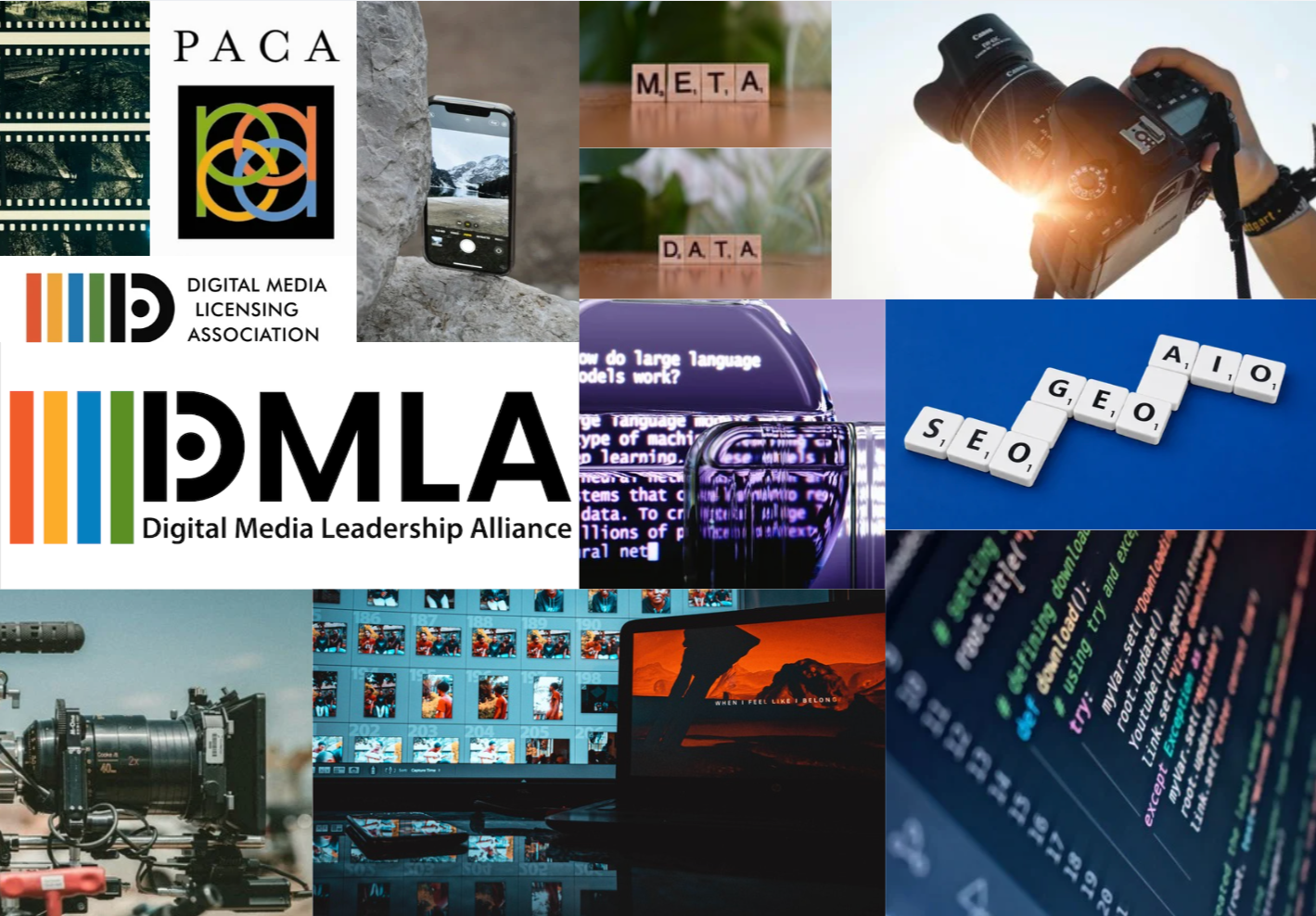
In 2016, the organization adopted a new name: the Digital Media Licensing Association (DMLA). The change reflected a marketplace that had evolved far beyond its origins in stock photography and image archives. Digital content, video, technology platforms, metadata, and global distribution networks had become central to the way media was created, managed, discovered, and licensed.
As the pace of technological change accelerated, DMLA continued to expand its role as a forum where industry leaders could come together to address emerging challenges and opportunities. The organization broadened its educational offerings, strengthened its advocacy efforts, and welcomed a more diverse membership representing creators, agencies, publishers, technology companies, legal professionals, archives, distributors, and content platforms.
The COVID-19 pandemic presented new challenges for organizations around the world, but it also demonstrated the resilience of the DMLA community. In 2020, DMLA successfully launched its first fully virtual conference, ensuring that members could continue to learn, connect, and collaborate during a period of unprecedented disruption.
At the same time, new technologies were rapidly reshaping the media landscape. Artificial intelligence, content authenticity, metadata, search and discoverability, privacy, and content provenance emerged as critical issues affecting creators, rights holders, technology companies, and consumers alike. DMLA responded by creating new educational programs, industry discussions, and working groups focused on helping members navigate this evolving environment.
As the organization approached its 75th anniversary, it became increasingly clear that its mission extended beyond licensing alone. The challenges facing the industry now spanned technology, policy, innovation, intellectual property, discoverability, trust, and leadership. To reflect this broader role, DMLA adopted a new identity in 2026: the Digital Media Leadership Alliance.
The new name represents more than a rebrand. It reflects the organization's continuing commitment to shaping the future of digital media through advocacy, education, and connectivity. Today, DMLA brings together leaders from across the content ecosystem to address the opportunities and challenges created by emerging technologies while championing the value of creative work and responsible innovation.
From picture archives and stock photography to artificial intelligence and digital discovery, DMLA has helped the industry navigate more than seven decades of transformation. As technology continues to evolve, the organization remains focused on the same fundamental mission that inspired its founders in 1951: bringing industry leaders together to address shared challenges, advance professional standards, and help shape the future of media.
The Next Chapter
For 75 years, DMLA has helped the industry navigate change. Today, we continue that mission by bringing together leaders across content, technology, rights, and licensing to help shape the future of digital media.
Leadership endures.
For 75 years, DMLA has helped the media industry navigate periods of extraordinary change—from the rise of stock photography and global licensing to the digital revolution, online distribution, and the emergence of artificial intelligence.
Today, the pace of transformation continues to accelerate. New technologies are reshaping how content is created, discovered, licensed, authenticated, and monetized. Artificial intelligence, content provenance, metadata, discoverability, privacy, and evolving copyright frameworks are creating both new opportunities and new challenges for creators, rights holders, technology companies, and consumers.
As the Digital Media Leadership Alliance, DMLA is committed to helping the industry navigate this next era responsibly and collaboratively. Through advocacy, education, and connectivity, the Alliance brings together leaders from across the digital media ecosystem to address critical issues, share knowledge, develop best practices, and advance responsible innovation.
While technology continues to evolve, DMLA's purpose remains rooted in the same principle that inspired its founders in 1951: bringing industry leaders together to solve shared challenges and help shape the future.
The tools may change. The platforms may change. The technology may change.
Leadership endures.
The next chapter is already being written.
Be Part of the Next Chapter
For 75 years, DMLA has brought together leaders across content, technology, rights, and licensing.
We invite you to be part of our next chapter.
Join DMLA
Become part of a global network of industry leaders. Have a voice in shaping the digital media ecosystem.
Stay Connected
Receive updates on industry trends, events, advocacy initiatives, and educational programs.